Skip to content

Service Robots Compared

16 models from 6 manufacturers compared

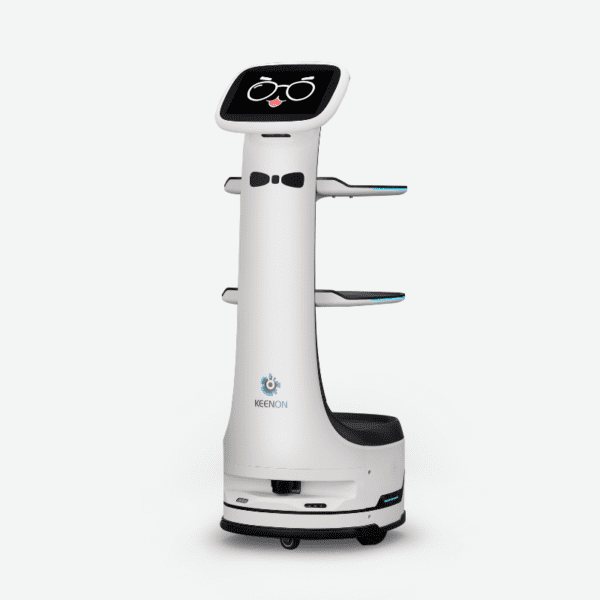
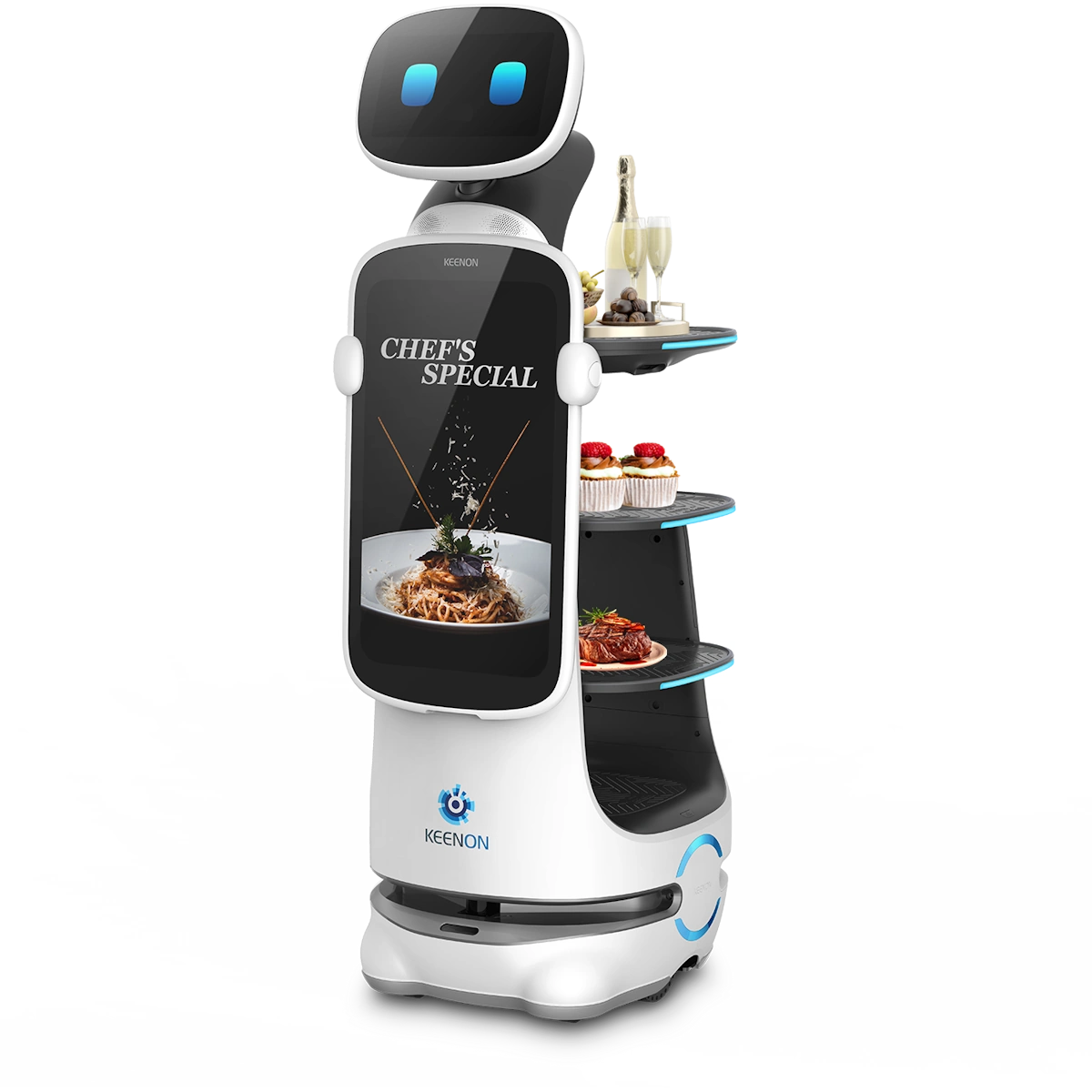
Service robots assist in restaurants, hotels, and other hospitality sectors with serving and transporting food, beverages, and other items. They navigate autonomously through spaces and deliver orders directly to tables or desired rooms. Equipped with multiple tray levels, they can transport various orders simultaneously. Advanced models offer voice interaction to greet guests and guide them to tables. Integration is typically via Wi-Fi and can be connected to existing POS systems. Service robots are particularly suitable for businesses experiencing staff shortages, as they handle routine tasks such as clearing dishes or transporting food. When selecting a model, consider the number of trays, maximum payload, battery life, and noise level. The ability to connect to elevators is also relevant for multi-story establishments.

Top 5 Service Robots compared

Model ManufacturerWeightSpeedRuntime
Keenon DINERBOT T11 DINERBOT T11 KEENON Robotics38 kg1.0 m/s10.0 hDetails
KEENON DINERBOT T8 DINERBOT T8 KEENON Robotics35 kg0.8 m/s10.0 hDetails
Keenon DINERBOT T9 DINERBOT T9 KEENON Robotics63 kg0.8 m/s18.0 hDetails
Keenon Dinerbot T10 DINERBOT T10 KEENON Robotics58 kg1.0 m/s8.0 hDetails
Keenon DINERBOT T3 DINERBOT T3 KEENON Robotics71 kg0.8 m/s12.0 hDetails

All Service Robots (16)

Frequently asked questions about Service Robots

How much does a service robot cost?
Service robots for the hospitality industry cost between EUR 8,000 and EUR 30,000. Simple models with 2-3 trays and basic navigation are more affordable, while high-end models with voice interaction and advanced features cost more. Many providers offer rental models starting at approximately EUR 500 per month.
How do service robots navigate in restaurants?
Service robots use a combination of LiDAR, cameras, and ultrasonic sensors to navigate in dynamic environments. Routes are taught once during setup and can be flexibly adjusted. The robots automatically avoid guests, chairs, and other obstacles.
Can service robots replace waiters?
Service robots do not replace service staff but support them. They handle the transport of food and dishes, relieving staff from physically demanding routine tasks. This allows staff to focus better on personal guest care.
How loud are service robots?
Most service robots operate at a noise level of 40 to 55 dB(A), comparable to a quiet conversation. They generally do not disturb restaurant operations. Some models feature a quiet mode for particularly noise-sensitive environments.
What requirements does a restaurant need for a service robot?
The key requirements are sufficiently wide aisles (min. 70-80 cm), a level floor without major thresholds, and a stable Wi-Fi connection. Most restaurants already meet these requirements. Setup typically takes 1-2 days.